
Seven Sectors Could Power a C$3 Trillion Canadian Sovereign Wealth Fund by 2040
New research identifies the seven economic engines, investment requirements and pathways to building long-term wealth for Canadians.
Seven sectors of Canada's economy could help power a C$3 trillion sovereign wealth fund by 2040, according to new research by strategist Nader Sabry.
The seven-part analysis identifies where investment is needed in Canada's resources, infrastructure, workforce, technology, finance, manufacturing and institutions—and why all seven must advance together.
The newly consolidated seven-study outlook moves the debate from the size of a possible fund to the economic capacity Canada would need to build: projects, people, financing, production and institutions working together.
The central challenge is to move from announced investment to productive projects, and from economic growth to a lasting share of wealth for Canadians.
Canada has already announced an initial C$25 billion federal commitment to its Canada Strong Fund, while its September 2026 investment summit reported nearly C$500 billion in commitments and financing plans. Neither amount represents C$3 trillion in fund assets. Sabry's 2040 target is an independent projection of what a much larger national wealth-building strategy could achieve.
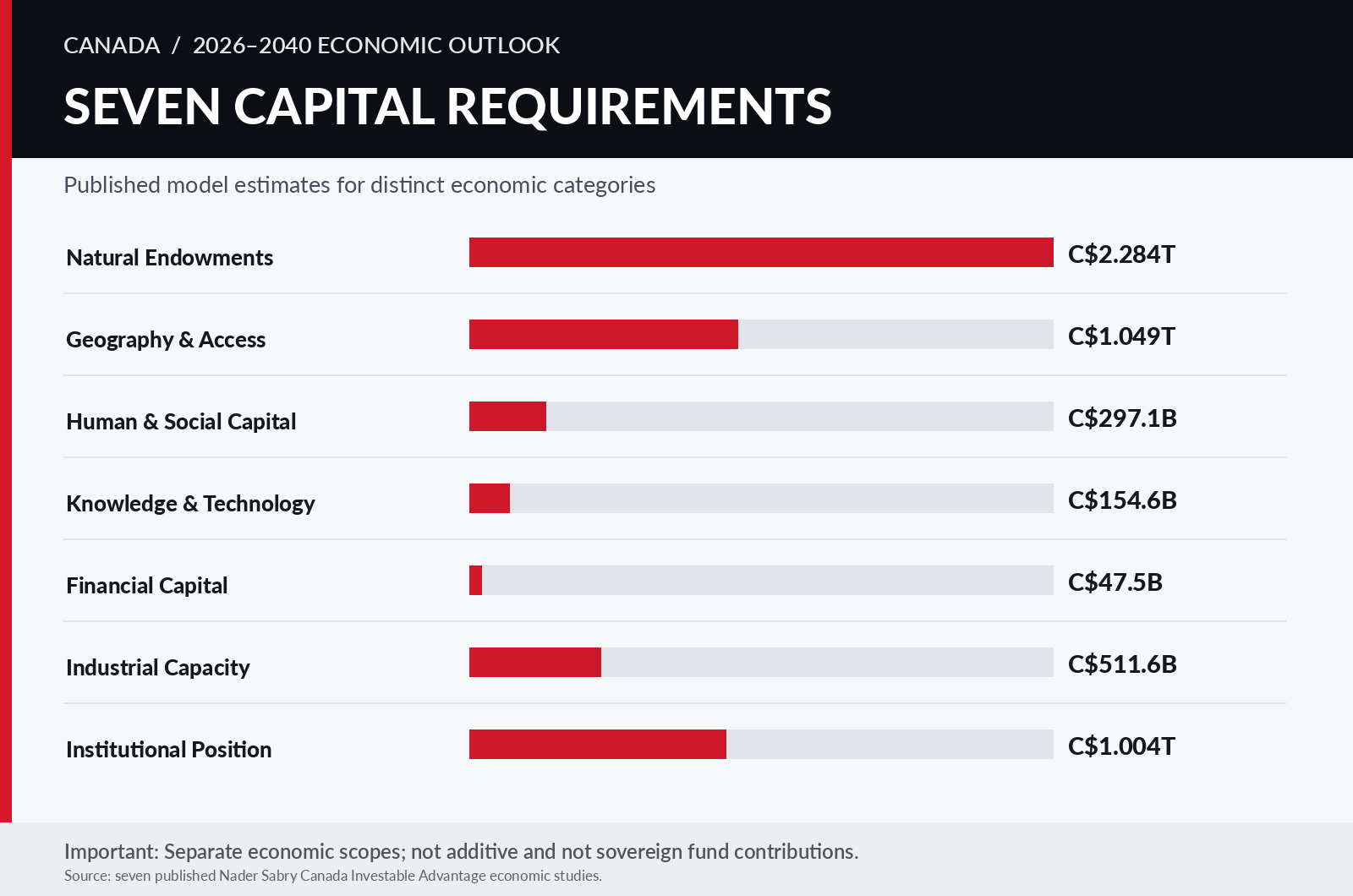
Seven economic engines behind the C$3 trillion ambition
Each figure represents the published sector's modeled cumulative investment requirement or activity through 2040. These are different measures—not direct contributions to a sovereign wealth fund.
Natural resources
Energy, minerals, agriculture and other resources give Canada a major economic base. Investment in extraction, processing and export capacity would help Canada keep more value at home.
Explore Natural Endowments researchinvestment outlook
Infrastructure & trade
Ports, rail, roads and logistics are what turn output into sales. More reliable connections help Canadian businesses reach customers, grow exports and attract investment.
Explore Geography & Access researchinvestment outlook
Talent & education
Projects cannot be built or run without people. Skills, training and workforce mobility determine whether investment creates productive companies or stalls for lack of talent.
Explore Human & Social Capital researchinvestment outlook
Technology & innovation
Canada must convert research and ideas into commercially successful products, intellectual property and businesses. That is how innovation becomes jobs, exports and returns.
Explore Knowledge & Technology researchinvestment outlook
Financial capital
Financing institutions help move savings and investment into viable projects. This estimate covers the financial sector’s own modeled operating investment—not all the capital it could mobilize.
Explore Financial Capital researchinvestment outlook
Manufacturing & industry
Modern plants and equipment allow Canada to process more inputs and sell higher-value goods. Industrial capacity also supports suppliers, jobs and stronger domestic supply chains.
Explore Industrial & Productive Capacity researchinvestment outlook
Institutions & delivery
Projects need permits, reliable public services and effective coordination. This estimate covers modeled public-administration capital expenditure—not a dedicated pool of wealth-fund financing.
Explore Institutional & Strategic Position researchinvestment outlook
Investment only creates wealth when the pieces connect
A critical-minerals project illustrates the challenge. A deposit needs financing, permits, power, roads, trained workers and processing capacity before it can deliver products to customers. Technology improves productivity; manufacturing helps capture more value within Canada.
Missing any major piece can delay the whole investment. The seven sectors are not separate bets. They are parts of the same economic system.
What must happen next
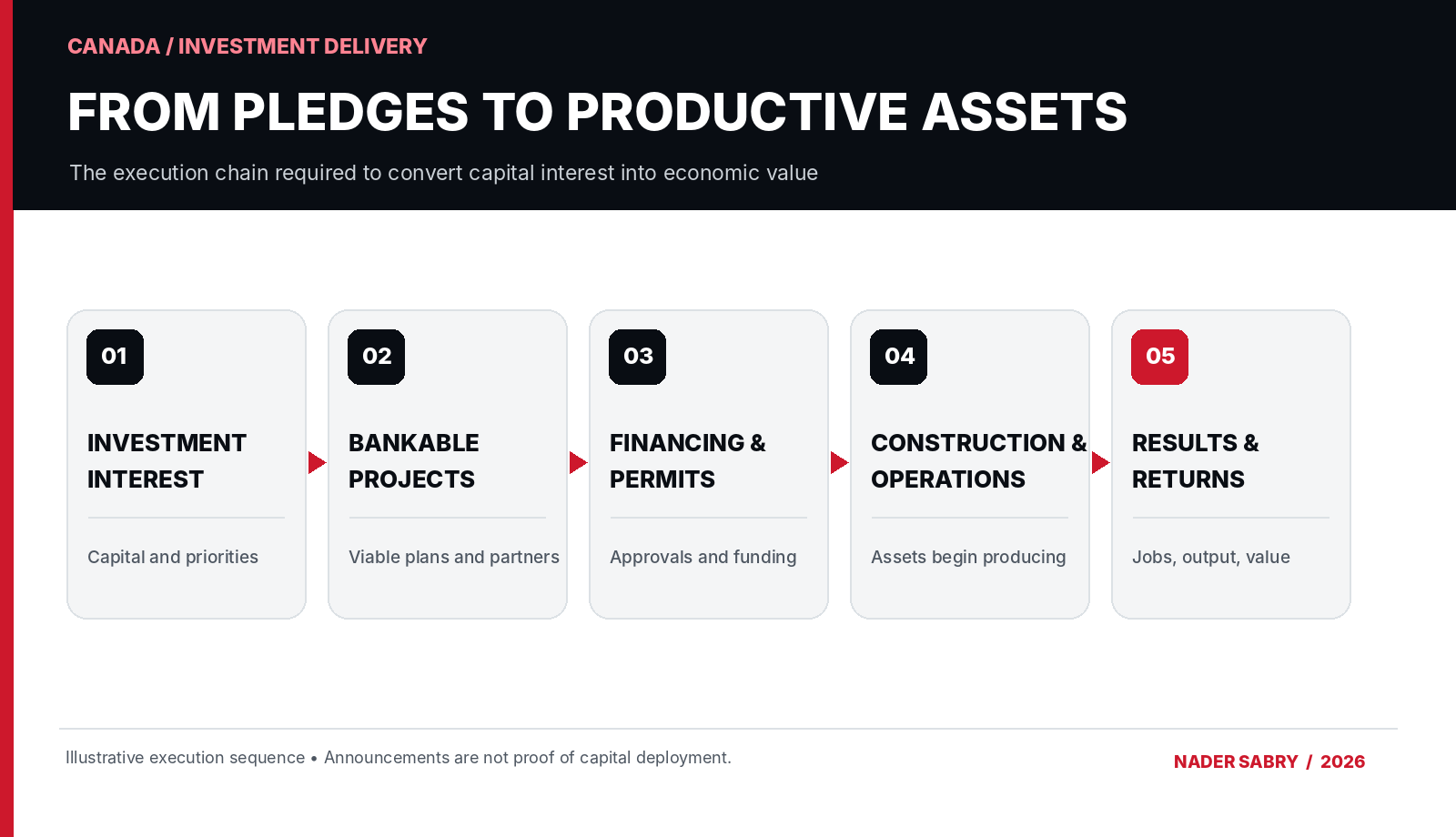
Canada needs an investment pipeline that makes projects ready to finance, build and operate. That means identifying commercially viable opportunities, resolving delivery barriers, connecting the right partners and measuring what is actually completed.
Sabry's National Investment Pipeline proposal sets out how to move from capital interest to projects, jobs, suppliers and participation. The companion investment tool maps 168 opportunities for deeper review by investors and decision-makers.
How Canadians could share in the value
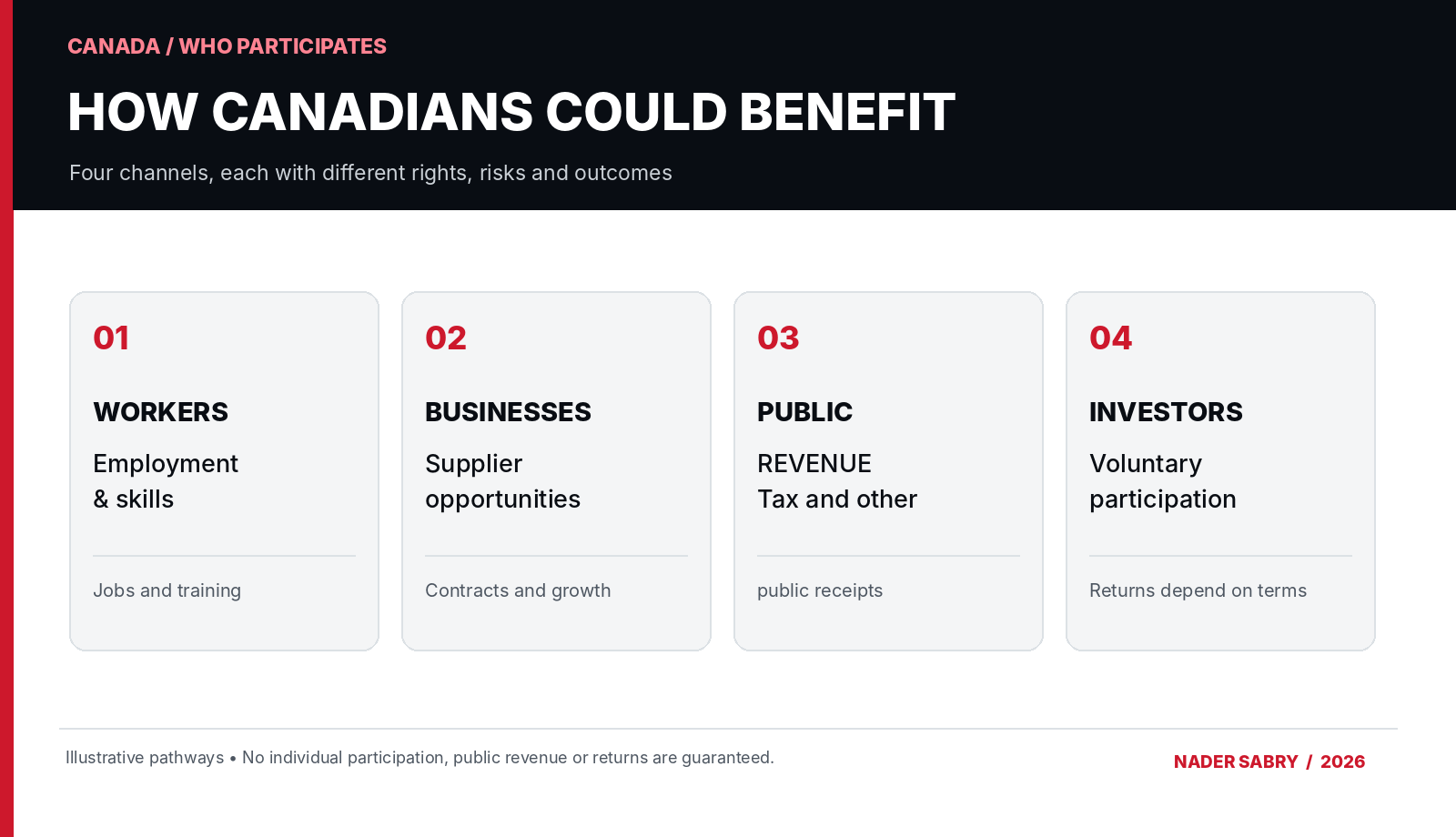
Economic growth can create jobs, supplier contracts, skills and public revenue. More direct wealth-building requires clear rules about who contributes capital, who owns the investments, who carries the risk and who receives the returns.
The Funding & Benefits analysis examines those choices. The National Investment Pipeline shows how Canadians could participate through employment, businesses, partnerships and suitable investment channels where legally available.
The C$3 trillion pathway
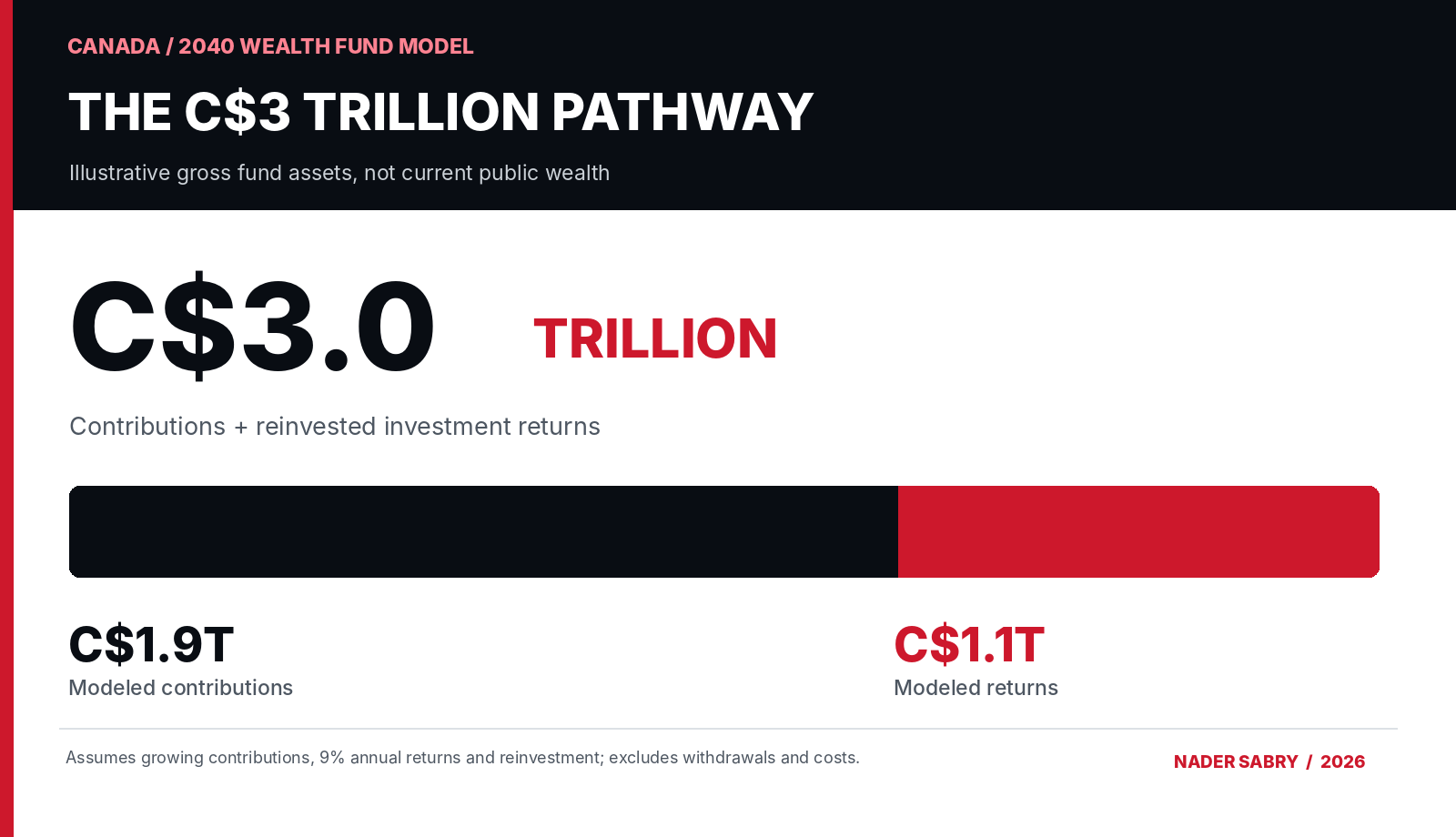
The C$3 trillion figure is an independent projection of gross fund assets by 2040, not an official government target or money currently held in the fund. It depends on sustained contributions and reinvested returns. Productive investment across the seven sectors could strengthen Canada's economic base, but private projects do not automatically become publicly owned fund assets.
Public wealth grows only when Canada earns and retains eligible public returns, acquires actual ownership interests or makes authorized capital contributions. The full C$3 trillion analysis explains the broader ambition and its funding assumptions.
Explore the underlying work
Read the research methodology, explore 168 investment opportunities, or contact Nader Sabry for media enquiries.
Download the research graphics
Original high-resolution illustrations and infographics supporting this release. Reuse with source credit to Nader Sabry and the relevant research.

Source: Nader Sabry, Canada Investable Advantage economic research and C$3 trillion fund model. Figures represent distinct measures and are not additive.